
Dizzy Gillespie Net Worth
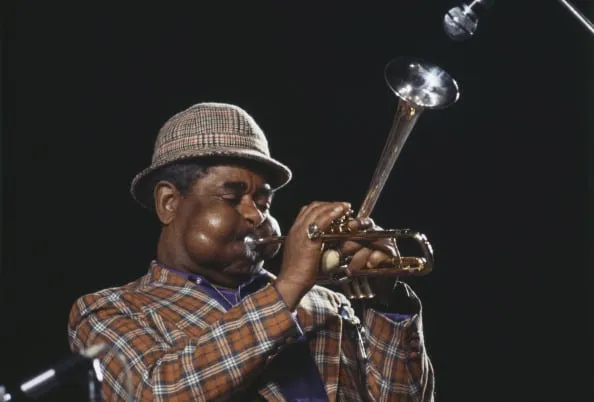
John Birks Dizzy Gillespie October 21, 1917, January 6, 1993 was an American jazz trumpeter, bandleader, composer, and educator whose virtuosity, imagination, and showmanship helped create and popularize bebop and Afro-Cuban jazz. With a famously bent trumpet bell, a blazing upper register, and a comic, magnetic stage presence, Gillespie rewrote what the trumpet could do in jazz, partnering with figures such as Charlie Parker and Chano Pozo to push harmonic and rhythmic boundaries. His leadership of big bands, his work as a composer and arranger, and his later role as a global musical ambassador made him one of the 20th century’s most influential jazz figures.
Net Worth Latest Figure
Estimates for Dizzy Gillespie’s wealth vary by source. Several reference sites and retrospectives put his reported estate at the time of his death in 1993 at roughly $4 million, which some outlets convert to an inflation-adjusted equivalent of about $8–10 million in 2025 dollars; other aggregators list slightly higher round figures up to $10M. These differences reflect methodology (reported assets at death vs. later-value adjustments, inclusion of publishing/pension income, and whether posthumous licensing is counted). For readers: the conservative, frequently cited figure is $4 million at death $8M–$10M in 2025 dollars, depending on adjustment method.
Short note on phrasing: because Gillespie died in 1993, most modern net worth discussions are estate estimations and inflation adjustments, not active current-year earnings.
Income Sources
Gillespie’s lifetime income and the ongoing earnings connected to his catalog came from several clear streams:
- Record sales and publishing royalties: sales from dozens of studio and live recordings spanning small combos and big bands; composition royalties for standards he wrote or co-wrote, e.g., A Night in Tunisia
- Touring and live performance fees: decades of domestic and international touring, residencies, festival appearances, and diplomatic/cultural tours, including work with the United Nations Orchestra in his later years.
- Broadcasts, film & TV placements, and licensing: film soundtracks, TV appearances, and later licensing of classic recordings to compilations and commercials contributed recurring payments.
- Commissions, big-band engagements & arrangements: paid performances with symphonies and large ensembles, plus commissioned works.
- Educational activity and ambassadorship: masterclasses, educational appearances, and cultural diplomacy, which sometimes carried honoraria or stipends.
Because these revenue streams persist after death, especially publishing and licensing, Gillespie’s estate continued to receive income from reissues and sampled/licensed usage, a major reason why adjusted estimates grow over time.
Career Highlights
- Early career & big bands 1930s–1940s: Gillespie played with major swing-era leaders Cab Calloway, Teddy Hill, Earl Hines) before becoming a central figure in the bebop revolution.
- Bebop pioneer mid-1940s: Alongside Charlie Parker and Thelonious Monk, Dizzy helped invent bebop, a much faster, harmonically complex style that changed jazz forever. This period produced classics and established Gillespie’s name internationally.
- Afro-Cuban collaboration late-1940s: His work with Cuban percussionist Chano Pozo introduced Afro-Cuban rhythms to modern jazz (notably on compositions like Manteca, creating an enduring cross-cultural thread in his music.
- Big-band leadership & the United Nations Orchestra 1970s–1980s: Gillespie led large ensembles that toured the world; in the 1980s, he spearheaded multinational ensembles, the United Nations Orchestra, that reinforced his role as a musical statesman.
- Awards & honors: Grammy recognition, a Grammy Lifetime Achievement Award in 1989, Kennedy Center Honors 1990, honorary doctorates, and numerous other international distinctions punctuated his later life. These honors amplified his marketability and catalog value.
- Each of these career peaks not only boosted Dizzy’s profile artistically but also created catalog and performance value that translated into earnings (and posthumous licensing) over decades.
Assets
Public records and biographies emphasize Dizzy’s musical assets, original instruments, manuscripts, recordings, and publishing rights far more than flashy physical assets.
- Publishing catalog and masters: arguably the most valuable asset, since compositions like A Night in Tunisia and major recorded performances generate royalties and synchronization fees. This publishing income is the core of posthumous revenue.
- Instruments & memorabilia: the bent-bell trumpet and period instruments have monetary and museum value; such items sometimes enter private collections or institutions. Museum provenance can add to estate valuation, but specific sale records are rarely public.
- Real estate: there is no widely published, detailed inventory of personal real estate holdings that would decisively affect published net worth figures; most publicly cited valuations focus on musical catalog value and royalties.
Because catalog ownership and the split agreements behind composition/master rights are complex, small differences in how sources treat publishing vs. recorded master ownership explain much of the variation among net-worth estimates.
Liabilities or Debts
There is no well-documented public record showing major, lasting debts that undid Gillespie’s estate. Unlike a few entertainers whose tax or legal issues created headline bankruptcies, most published retrospectives treat Gillespie’s financial state as modest but stable at death, with his catalog and royalties viewed as the principal asset. As always with historical figures, some family or estate-level liabilities may exist in private probate records, but nothing appears widely reported enough to change published net-worth estimates.
Net Worth Timeline
- 1940s–1950s rising artist era: Earnings from big-band wages, club gigs, recordings, and initial publishing income began to accumulate; however, these early years were not typically high-pay compared to later international touring.
- 1960s–1970s established star: Continued recording, global tours, and increased publishing revenue; compositions had become established standards, providing recurring income streams.
- 1980s–1993 honors & international ambassador: With major honors, festival appearances, and leadership of ensembles including the United Nations Orchestra, the income and market value of Gillespie’s catalog rose.
- 1993 at death: Public estimations put his estate value around $4 million, the number most often cited by celebrity net-worth trackers for his assets at death.
- 1993–2025 posthumous valuation: Continued reissues, licensing, awards legacy, and inflation adjustments lead modern outlets to present higher present-day equivalents, commonly in the range of $8–$10 million, depending on methodology.
Comparison with Peers
Dizzy’s financial and cultural standing sit comfortably among historic jazz greats, though direct dollar-for-dollar comparisons are tricky because each artist’s catalog, commercial crossover, and estate management differ.
- Miles Davis and Herbie Hancock developed expansive catalogs and commercial connections; their estates and late-career activities created substantial, but variable, estate values.
- Louis Armstrong and Duke Ellington, as earlier icons, also left enduring catalogs and sizable cultural capital, sometimes reflected in higher historical asset figures.
- Contemporary instrumental crossover artists like Chuck Mangione combined jazz credibility with mainstream pop success; readers who want to compare a similar instrumentalist with cross-genre commercial hits can see Chuck Mangione’s Net Worth for a direct peer reference.
Money aside, Gillespie’s influence on bebop and Afro-Cuban jazz fusion is often judged as equal to, or greater than, many peers, and that cultural influence is a major reason his catalog remains monetarily valuable.
Future Predictions
Even decades after his death, several realistic trends suggest Gillespie-related revenues could stay steady or slowly increase:
- Streaming & catalog rediscovery: As younger listeners discover classic jazz via playlists, streams add micro-royalties that accumulate over time.
- Film/TV placement: Historic jazz is in demand for period shows and films; new placements yield sync fees.
- Reissues & boxed sets: Curated reissues, deluxe box sets, and archival releases often bump catalog value.
- Cultural events & anniversaries: Centennials, tribute concerts, and institutional exhibitions, e.g., museums or Kennedy Center programming, often spur licensing and sales spikes.
For these reasons, many estimators treat present-day valuations as conservative when they factor long-tail licensing potential, meaning the estate’s market value could continue to rise incrementally over the long term.
Personal Life
- Full name: John Birks Gillespie.
- Born: October 21, 1917, Cheraw, South Carolina.
- Died: January 6, 1993, Englewood, New Jersey, of pancreatic cancer.
- Personality & image: Known for theatrical on-stage antics, a quick wit, a trademark beret and goatee, and the bent trumpet that became an icon of his persona. He was also a teacher and mentor, especially later in life when he led large ensembles that showcased younger talent.


